
What’s Really Causing Your Cart Abandonment?
Quick answer: If people are adding to cart and then vanishing before they buy, the problem is rarely “bad traffic.” It’s usually something specific and fixable in your checkout flow, and the only way to find it is by tracking what customers actually do, not guessing. Here’s what that looked like for one client, and what it found.
The problem: guessing where customers drop off instead of tracking it

When it comes to abandoned carts and checkouts, it can feel a bit like your customers are filling a suitcase for a holiday, then cancelling because the final cost suddenly feels too real.
Most business owners follow the same path. They commission a website, turn on Google Ads, do some SEO, Meta ads, maybe start a blog. What they don’t do is look closely at what customers are actually doing once they land on the site.
That’s the real advantage of online marketing over its offline counterparts: you can track everything. Which pages people look at, how long they spend there, whether they downloaded something, whether they clicked add to cart. Almost everything a visitor does is sitting in your Google Analytics account already, waiting to be looked at properly.
A real example: the page that was quietly killing conversions
We worked with a client “s”, and set up a full cart abandonment funnel: cart page, checkout page, a confirmation page, and the final sale page.
As soon as we looked at that funnel, one thing stood out. A large share of people were dropping out at the confirmation page. That raised an obvious question: why did it even exist? The customer had already added to cart, gone through checkout, and entered their shipping details. An extra page at that point wasn’t adding anything for them. It was just one more step, and one more chance to bail.
We removed it. Conversion rate improved meaningfully as a result. Without accurate tracking in place, there would have been no way to see that so many people were dropping out on that specific page, and no way to justify getting rid of it. It’s an easy thing to miss when you’re not looking at the funnel step by step.
The flip side: knowing which channels deserve more of your budget
Tracking doesn’t just show you what’s broken on your site. It also shows you which marketing channels are actually converting. Once you can see that, you can scale up the channels earning their spend and turn down, or rethink, the ones that aren’t.
That’s the real point of a measurement plan in practice: spending your budget on people who are likely to buy, rather than on vague or irrelevant traffic that was never going to convert in the first place. If you want the full breakdown of what a measurement plan should actually include, we’ve covered that in depth in why every Shopify store needs a measurement plan.
Why we set up tracking before anything else
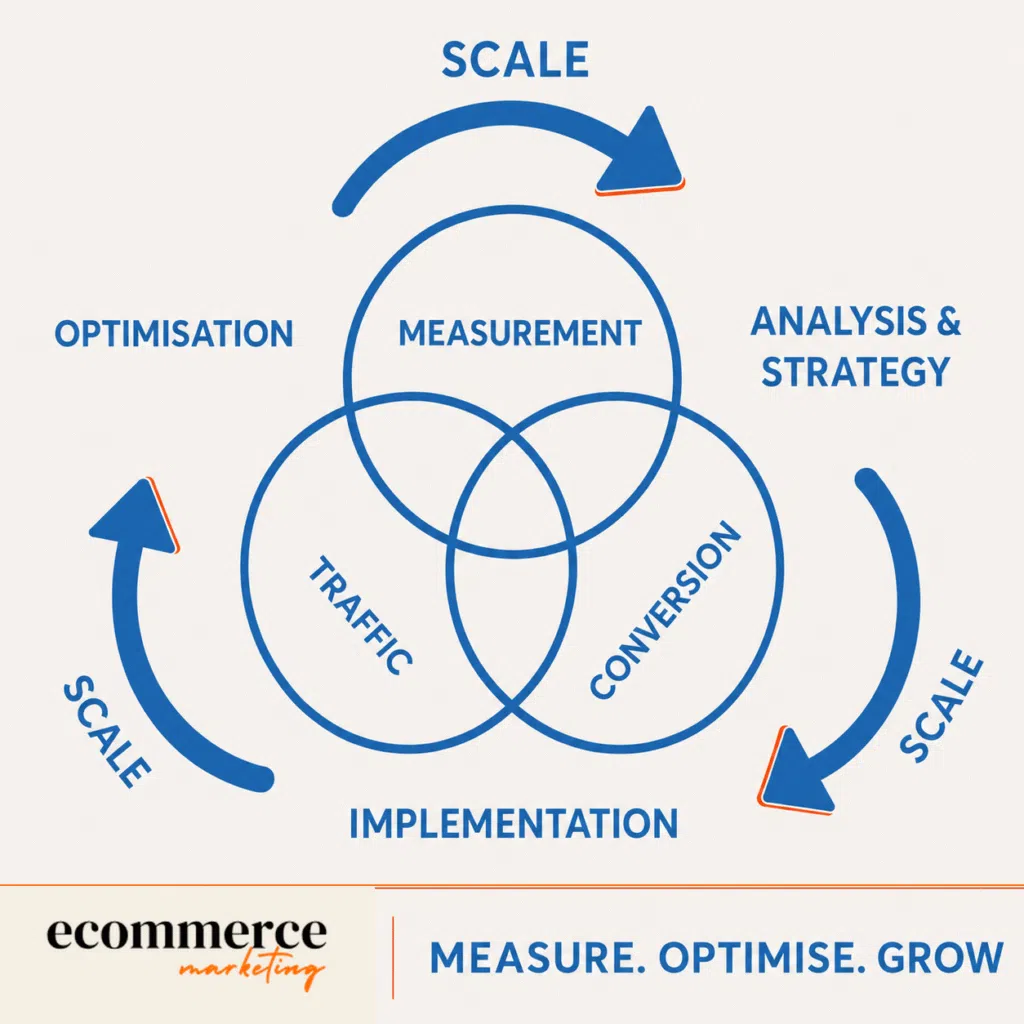
When we start working with a new client, the first thing we do is set up proper measurement and reporting. Partly because it helps the business owner make decisions with confidence instead of guesswork. Partly because it’s the only way to actually show the impact of any changes made afterwards – you started here, and you moved here.
The real cost of skipping this
The pattern we see most often when performance dips is that businesses throw more money at traffic. More ad spend, more content, more everything, without stopping to look at what’s actually happening once people arrive.
Without tracking, that spend usually goes into a leaky bucket: traffic pouring in and quietly leaking straight back out through a page, a step, or a moment of friction nobody’s looked at closely. The alternative is smaller and more specific: evaluate what’s actually happening, make the tweak that matters (like removing a page nobody needed), and let your budget go toward things that are already working. If ad performance itself is the concern rather than what happens after the click, our Google Ads and Meta Ads management pages cover how we approach that side of it.
Where to start looking
Before any of this is possible, a few basics need to be in place:
- Ecommerce tracking needs to be properly turned on in Google Analytics – this is what surfaces funnel data like the one that found Sierra’s confirmation page problem.
- A simple dashboard view of the numbers that matter, so you don’t need to be an analytics specialist to keep an eye on things day to day.
- A regular check of Google Search Console for anything flagged that needs attention.
Getting these three things set up correctly is what our analytics coaching covers if you’d rather learn to read your own data than hand it off entirely.
Frequently asked questions
What is a good cart abandonment rate for an ecommerce store?
There’s no single “good” rate – it varies by industry, price point, and traffic source. What matters more than the overall percentage is knowing exactly which step in your funnel people are leaving from, and why.
How do I find out why customers are abandoning their cart?
Set up a proper checkout funnel in your analytics, covering cart, checkout, any confirmation step, and purchase. That’s what shows you exactly which step people are leaving from, rather than just that they left.
Does an extra confirmation page hurt conversion rates?
It can, if it isn’t adding real value. Every extra step after checkout gives someone one more moment to hesitate or leave, especially if the page isn’t doing anything the customer actually needs.
Do I need to be a data analyst to track cart abandonment?
No. A simple dashboard view of the key numbers is usually enough to spot when something’s wrong. You don’t need to live in the data to notice a page that’s leaking customers.
Should I fix cart abandonment before spending more on ads?
Generally, yes. Fixing a leak in the funnel usually earns more than pouring additional traffic into a funnel that’s still leaking.
If you’re not sure whether your own checkout is quietly leaking customers the way Sierra’s confirmation page was, that’s exactly the kind of thing a proper look at your data will show. Book a fit call and we’ll look at what your measurement plan should include for your store, and where to start.