Quick Answer: The most reliable way to drive traffic to your website is to combine paid advertising for immediate results with SEO for long-term visibility. In 2026, that also means showing up in AI tools like ChatGPT, Perplexity, and Google Gemini, which now handle hundreds of millions of searches that used to go through Google. Paid ads bring traffic now. SEO builds it over time. AI search visibility protects what you have built from being replaced by an AI answer that sends nobody to your site.
How do I drive more traffic to my website? Every business owner asks this question at some point. You build the site, spend hours loading products or writing copy, hit publish, and wait. Sometimes you get tumbleweeds. Other times you get a slow drip of visitors, but not the volume of sales you need to grow. Traffic is only half the equation. However, without it, nothing else matters. You cannot convert visitors who never arrive.
So before we get into the five strategies, there is one thing to check first.

Fix Conversion Before You Turn Up the Traffic
If your website is not converting the visitors it already gets, more traffic will not fix that. It will mean more people arriving at a page that does not do its job.
Think about it this way. If 100 visitors arrive and 1 buys, your conversion rate is 1%. Send 1,000 visitors and you get 10 sales. However, if you first fix the website and lift that conversion rate to 3%, those same 1,000 visitors produce 30 sales. Same traffic spend. Triple the sales.
So audit what happens when someone lands on your site. Is the messaging clear? Does the page tell them exactly what to do next? Is the checkout simple? Fix those gaps first. Then drive traffic to your website.
Five Ways to Drive Traffic to Your Website
1. Google Ads: Get in Front of People Actively Searching for You
Google Ads puts your message in front of people who are actively searching for what you sell. These are not cold audiences. They are buyers in the moment of need, typing the words that describe your product right now.
Because of this, Google Search Ads tend to convert better than most other paid channels. The intent is already there. Your job is to match their search with the right message and the right page.
Google Shopping Ads work similarly for product-based businesses, showing your products directly in search results with an image, price, and store name. For eCommerce brands, this is often the highest-return paid channel available.
The catch is that Google Ads can burn through budget fast if the campaign structure, match types, and negative keywords are not set up correctly. Our post on the five costliest Google Ads mistakes eCommerce brands make covers the most common problems to avoid. If you would rather have it managed for you, our Google Ads management service handles setup, structure, and ongoing optimisation.
2. Meta Ads: Reach Your Ideal Customer Before They Start Searching
Facebook and Instagram ads run from the same platform: Meta Ads Manager. One campaign, one setup, and you choose whether it runs on Facebook, Instagram, or both. The audience targeting is powerful. You can reach people based on interests, behaviour, location, age, and a wide range of other signals.
More importantly, Meta Ads let you reach buyers before they go looking for your product. That makes them effective for building awareness and driving demand, particularly for products people might not yet know to search for.
Retargeting is also a strength of the platform. Meta lets you build custom audiences from your website visitors, email list, and existing customers, so warm traffic can be brought back to complete a purchase.
The most common mistake is running ads to a website that does not convert. As a result, spend goes out, clicks come in, and nothing happens. Fix the page first. Our Meta Ads management service includes a landing page review before any campaign goes live.
3. SEO: Get Found Without Paying for Every Click
Search engine optimisation is the process of making your website more likely to appear at the top of Google for the keywords your customers use when they are researching or ready to buy. Unlike paid ads, you do not pay per click. However, you do invest time and consistent effort over months, not days.
SEO covers your website content, technical performance, page speed, site structure, and the number of quality external websites that link to yours. Google looks at all of these signals to decide how much it trusts your site and how high to rank it.
One thing that catches many business owners out is this: launching a website and then not touching it. Google treats a static, unchanged site as low priority. If you do not update your content regularly, Google has little reason to crawl it, rank it, or send traffic to it. A blog, updated product pages, or fresh landing pages all signal that your site is active and worth visiting.
Google Search Console is free and shows which keywords your site ranks for, which pages get clicks, and any technical issues affecting your search visibility. It is the best place to start if you want to understand your current SEO performance.
For a full breakdown of what eCommerce SEO involves, our eCommerce SEO service covers the complete scope. If you prefer to learn it yourself, our SEO training programme teaches the fundamentals and practical implementation.
4. Content Marketing: Build Authority and Attract Buyers Over Time
Content marketing is not just publishing a monthly blog and hoping for the best. It is creating educational content that speaks directly to what your ideal customer needs to understand before they buy, so that by the time they find you, they are already halfway sold.
Good content works in multiple ways. It ranks in search results and drives organic traffic. Trust builds with readers who are not ready to buy yet, and you create material to share across social media, in email campaigns, and through other channels that all point back to your website.
Formats include blog posts, videos, guides, podcasts, and infographics. The format matters less than the thinking behind it. Ask yourself: what does my ideal customer need to understand to make a confident buying decision, and how can I help them get there?
Content marketing also builds backlinks over time. Quality content earns links from other websites, which strengthens your SEO and drives referral traffic at the same time.
5. AI Search Visibility: The Traffic Channel Most Businesses Are Missing
This section did not exist in any traffic guide written before 2023. In 2026, it may be the most important one.
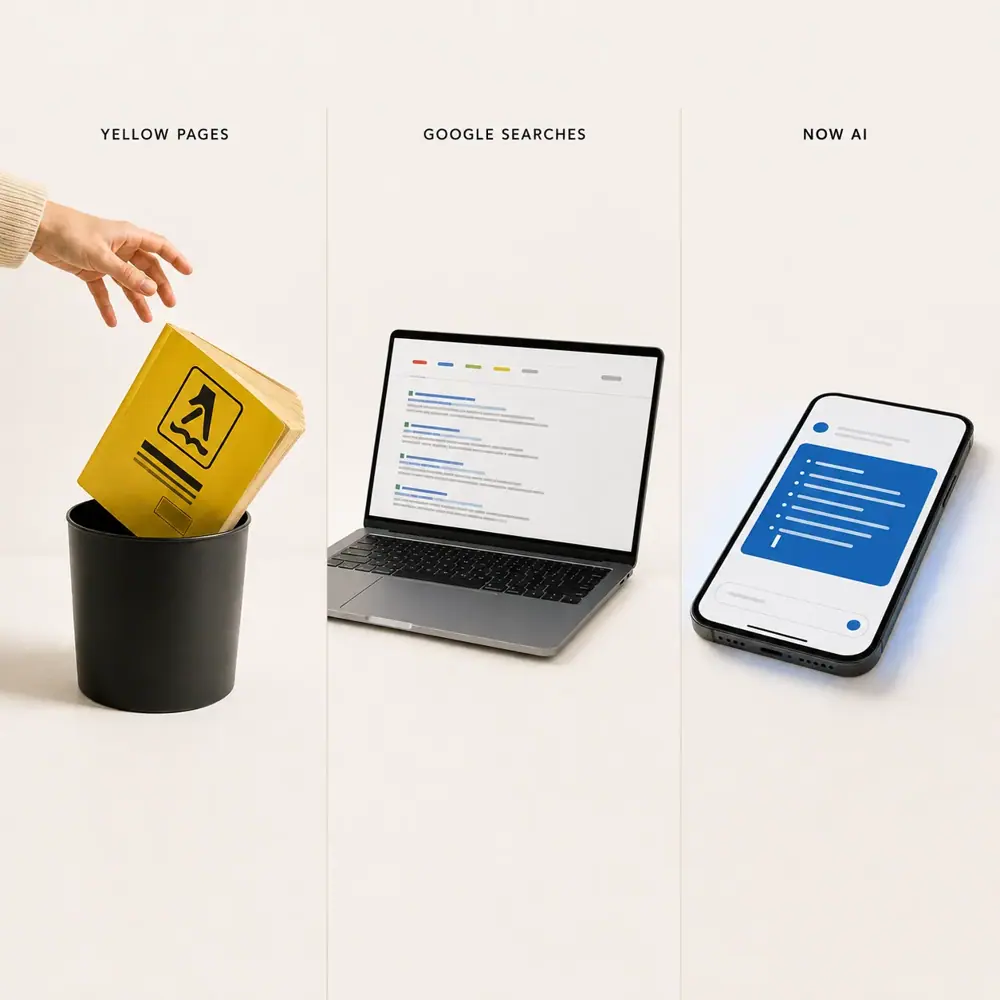
ChatGPT crossed 300 million weekly active users in early 2025. Tools like Perplexity, Google Gemini, Microsoft Copilot, and Claude handle hundreds of millions of searches every month that used to go through traditional search engines. When someone asks an AI assistant which Shopify marketing agency to use, or where to find the best outdoor furniture online, the AI gives a direct answer. It does not show ten blue links.
If your business does not appear in those answers, you are invisible to a fast-growing segment of buyers who no longer open a search engine at all.
At the same time, Google now shows AI Overviews at the top of many search results. These summaries answer the user’s question directly on the results page. Fewer people click through to websites as a result, even when those sites rank well. For some businesses, organic traffic has dropped significantly without anything on their end changing.
This does not mean SEO is dead. It means the rules have shifted. To appear in AI-generated answers, your website needs structured data markup, clear authoritative content, FAQ sections that answer real questions directly, and signals that tell AI systems you are a credible and trustworthy source.
We cover this in detail in our post on how AI is affecting your website traffic and what to do about it. Our AI Search Optimisation service covers everything needed to make your business visible in AI-powered results alongside traditional search.
Why One Traffic Channel Is Never Enough
Every channel above has a weakness. Google Ads stop the moment you stop spending. SEO takes months to build and a single algorithm update can disrupt it. AI search results shift as companies update their models. Social platforms change their rules without notice.
Because of this, the most resilient businesses build multiple traffic channels working together. Paid ads for immediate traffic. SEO for long-term compounding returns. Content marketing for authority and backlinks. AI search visibility for the segment of buyers who now start their research with an AI tool instead of a search engine.
What Supports Every Traffic Channel
One thing that strengthens all of these channels is also one of the most overlooked: claiming and maintaining your presence across the web.
Claim your social media profiles, even on platforms where you do not post actively. Set up and maintain a Google Business Profile. Make sure your business name, address, and contact details are consistent everywhere they appear online. These signals tell both Google and AI systems that you are a real, established business worth referencing.
Similarly, regular content updates tell Google your site is active and worth sending traffic to. A website that has not been touched in two years is not one Google will prioritise. In fact, many businesses find their traffic quietly declining not because of anything they did wrong, but because they stopped doing anything at all. Google does not reward inactivity.
The businesses that compound their traffic over time are the ones treating their website as an ongoing asset, not a one-time project.
Frequently Asked Questions About Driving Traffic to Your Website
How long does it take to drive traffic to your website with SEO?
SEO typically takes three to six months to show meaningful results and twelve months or more to reach its full potential. The compounding effect means the longer you invest, the more traffic it generates over time. Paid ads produce results immediately but stop when you stop spending. A combination of both is usually the most effective long-term approach.
What is the fastest way to drive traffic to your website?
Paid advertising is the fastest way to drive traffic to your website. Google Ads and Meta Ads can start sending visitors within hours of launch. However, fast traffic to a website that does not convert is just expensive. Always review your conversion rate and landing page performance before increasing ad spend.
Why is my website traffic declining even though I have not changed anything?
Not changing anything is often exactly the problem. Google expects websites to remain active and relevant. If you have not updated your content recently, competitors who publish consistently may have overtaken your rankings. Additionally, Google AI Overviews and AI search tools now answer many questions directly, reducing click-through rates for sites that rank but are not optimised for AI-powered results.
Do I need to be on every social media platform to get website traffic?
No. You do not need to post actively on every platform. However, claiming your profile on the major ones signals to Google that you are a real, established business. Active posting on one or two platforms where your audience spends time will produce better results than spreading thin across six with nothing to show on any of them.
How do I appear in AI search results like ChatGPT and Google Gemini?
To appear in AI search results, your website needs structured data markup, clear content that answers specific questions directly, strong trust signals like backlinks and business listings, and regular updates that signal you are an active authority in your field. Our AI Search Optimisation service covers all of this in a structured setup and ongoing management programme.
Getting traffic to your website is not a one-time fix. It is a system that needs to work across multiple channels, stay current with how search is changing, and be built on a website that can actually convert the visitors it earns. If you want to build that system yourself, our 8-week Shopify growth marketing training covers traffic, conversion, and how to make your marketing work together. If you want your AI search visibility set up for you so your business starts appearing where buyers are actually searching right now, that is what our AI Search Optimisation service is built for.